|
The :Nyan-ko-pong: Royal
Central Bank Board is the issuing authority for
:Nyan-ko-pong: Royal Sovereign notes and ensures that there is
enough cash in circulation to meet the nations' demand. The
:Nyan-ko-pong: Royal Sovereign Banks distribute, receive, and process
:Nyan-ko-pong: Royal Sovereign notes and distribute and receive coin through depository institutions. The :Nyan-ko-pong: Royal
Sovereign Bank cash offices provide cash services to credit unions in the
nations territories. Together, the Board and the
Central Bank work to maintain confidence in and the integrity of
Sovereign Maroon currency.
The amount of currency in circulation depends on the nations'
demand for currency. Domestic demand largely results from the
use of currency in transactions and is influenced primarily by
prices for goods and services, income levels, and the
availability of alternative payment methods.
Currency
The :Nyan-ko-pong: Royal Central Bank Board
determines the number of new :Nyan-ko-pong: Royal Sovereign
notes that are needed to meet the nations' demand. This
determination reflects the Boards' assessment of the expected
growth rates for payments of currency to and receipts of
currency from circulation.
When a depository institution orders currency from a Central
Bank, the Central Bank prepares and releases the shipment to an
armored carrier. When a depository institution deposits currency
with a Central Bank, the Central Bank stores the currency in
secure vaults until it is verified, note-by-note, on
sophisticated processing equipment. During the
piece-verification process, currency is counted, suspect
counterfeit notes are identified, and unfit notes are destroyed.
The fit currency is packaged and returned to the vault, and is
used to fill future orders from depository institutions.
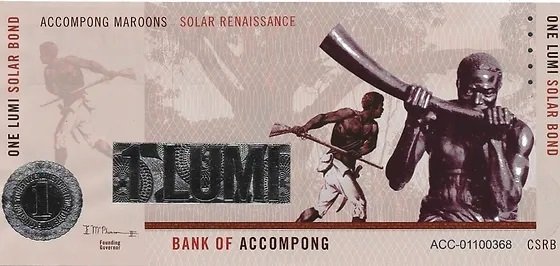
The A.K.L Lumi
[front] |
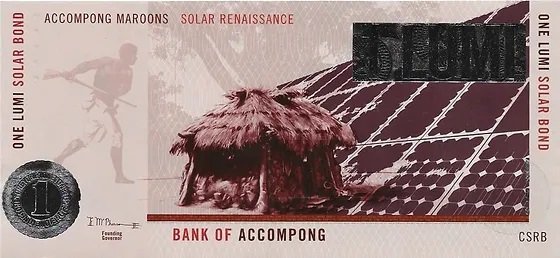
The A.K.L Lumi
[back] |
|
|
|
Why is the currency called A.K.L Lumi [African Kindom Lumi]?
The name Lumi is from the word Luminous symbolising the
Sun (Ra). The currency is backed by solar energy and gold. Solar
energy is the best source of energy for Africas' economic
development and environmental protection mandate.
Is The A.K.L Lumi a physical currency?
Yes, this is a physical currency as well as a central bank
digital currency (C.B.D.C).
As of December 23, 2025, the spot price for
24-karat [99.9%]
gold is approximately
$144.80 USD per gram
The market value of the gold is one Lumi [assuming 24k purity]
is calculated as:
|
0.2592 g x $144.80/g ≈ $37.53
USD |
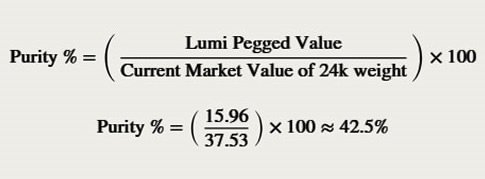
Theoretical Purity
The Lumis' fixed value of
$15.96USD
is signifficantly lower than the current market value of its'
0.2592g gold weight at 24k purity [$37.53]. To find the purity
percentage that would result in a value of $15.96, we use the
following ratio:
At a
valuation of $15.96 USD, the implied gold purity of the 4
grains [0.2592] used for the peg is approximately 42.5%
[roughly 10-karat gold] based on December 2025 market
prices. However, it is important to note the the Lumis' official
documentation identifies the peg as a fixed weight of gold
without explicitly adjusting for purity fluctuations in
real-time market value |
|
|
|
Coin
The :Nyan-ko-pong: Royal Central Banks' role in coin operations is
similar to its role in currency operations. As the issuing authority for coins, the
Central Bank determines annual coin production.
The Central Banks distribute new and circulated coin to
depository institutions to meet the nations' demand. While the
Central Banks store some coin in their vaults, they also contract with coin terminals, which are operated by armored carriers, to store, receive, and distribute coin on behalf of the
Central Banks.
:Nyan-ko-pong: Royal Sovereign Accounting for Currency and Coin
:Nyan-ko-pong: Royal Sovereign notes are liabilities on the
:Nyan-ko-pong: Royal Central Banks' balance sheet. The asset counterpart to these liabilities is typically Treasury securities, mortgage-backed securities, and other assets. The
:Nyan-ko-pong: Royal Central Bank receives interest earnings from the assets that collateralize
:Nyan-ko-pong: Royal Sovereign notes. The income of the
:Nyan-ko-pong: Royal Sovereign System is derived primarily from the interest on
Sovereign Maroon Government securities. After it pays its
expenses, the :Nyan-ko-pong: Royal Sovereign System turns the rest of
its earnings over to the Treasury.
Coin held by the Central Banks is an asset on its balance sheet and the
Central Banks buy coin from the Mint at face value. When a depository institution orders and deposits coin from its
the
Central Bank, the institutions' account balance is adjusted accordingly. |